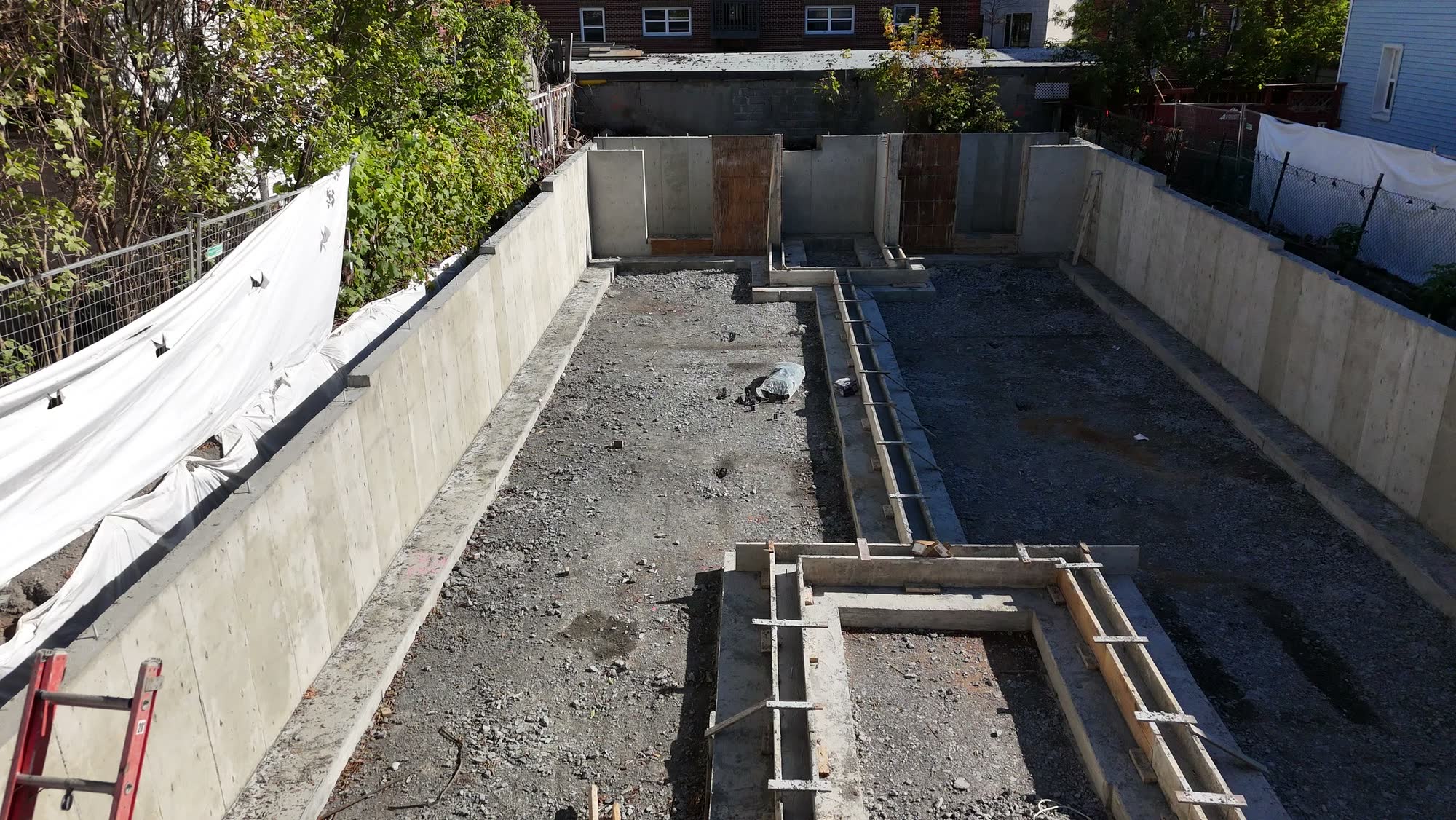
Construction financing is a short-term loan that funds a building while it's being built. It's advanced in stages (draws) as work is completed, and it's repaid by a long-term take-out mortgage once the building is finished and rented.
Your main options
- Conventional construction loans from banks and credit unions. Leverage is usually lower than insured options, so you'll typically need meaningful equity in the project.
- CMHC-insured construction financing (MLI Select) through an approved lender, for buildings of five or more units. Up to 95% loan-to-cost on new construction, depending on points.
- CMHC's Apartment Construction Loan Program. CMHC lends directly, up to 100% loan-to-cost for the strongest projects.
- Private and mezzanine lenders, faster and more flexible but more expensive. Usually used to bridge a gap rather than as the main loan.
What goes into a lender-ready package
Whatever the lender, the package answers the same questions: will this get built for this price, and will it be worth more than the loan when it's done?
- Budget: land, hard costs, soft costs (design, engineering, permits, development charges, financing fees, insurance) and a contingency.
- Drawings and permits: issued or near-issued building permits, and any Committee of Adjustment decisions.
- Schedule: a realistic construction timeline that drives the interest budget.
- Pro forma: projected rents, vacancy, operating costs and net operating income, supported by market evidence.
- Appraisal: an "as complete" or "as stabilized" value.
- Builder and borrower: experience, net worth and liquidity. For CMHC programs, net worth of at least 25% of the loan (minimum $100,000).
- Cost consultant: most lenders appoint a quantity surveyor to review the budget and certify each draw.
How draws work
Funds aren't advanced up front. Each month or at set milestones, the builder submits a draw request: work completed, invoices, lien searches and a cost-to-complete. The lender's cost consultant inspects and certifies it, and the lender advances funds for work in place. Ontario's Construction Act also requires a 10% holdback on payments to contractors, released after the lien period. A clean, well-documented draw process keeps trades paid and the schedule on track.
CMHC's fee schedule distinguishes loans with up to two advances from those with more. A construction loan with progress draws carries a higher per-unit application fee, plus $350 per advance from the third onward.
How much equity you'll need
Equity is the gap between the total project cost and the loan. Under MLI Select, new construction can be financed up to 95% of cost. Under the ACLP, Tier 1 projects can reach 100% of residential costs and finance land equity. Conventional lenders typically lend a lower share of cost. Land you already own usually counts toward your equity at its appraised value, which is why owners with land are often well positioned to build.
The cost of CMHC insurance during construction
CMHC's premium for standard rental construction financing scales with leverage. It ranges from 3.25% at 65% loan-to-value up to 7.00% above 90% (MLI Select only), plus 0.25% for every five years of amortization beyond 25. MLI Select points cut that premium by 10%, 20% or 30%. The premium can be added to the loan.
Where projects get stuck
- Budgets without a real contingency, or soft costs left out.
- Rents in the pro forma that the market won't support.
- Designs that miss the energy or accessibility targets the financing assumed.
- Permits that aren't ready when the lender is.
How we help
We build our own rentals, so we prepare budgets, schedules and pro formas that hold up to lender review, and we run draws every month. We prepare your financing package and work with your lender or broker to secure it.
Questions
How much down payment do I need to build a multiplex?
It depends on the program. MLI Select allows up to 95% loan-to-cost on new construction of five or more units, and the ACLP up to 100% for top-scoring projects. Conventional lenders usually require more equity. Land you own typically counts toward equity.
What is a construction draw?
A partial advance of the construction loan, released after the lender's cost consultant confirms the work completed.
What is the holdback in Ontario?
Ontario's Construction Act requires owners to hold back 10% of payments to contractors until the lien period passes.
Sources: CMHC MLI Select · CMHC Apartment Construction Loan Program. Program terms are set by CMHC and can change; confirm current terms with your lender.